Talevo's editorial process follows a structured sequence from supplier identification through independent batch verification to published content. Each stage is documented and cross-referenced by batch code and review date.
Each ingredient supplier entering the Talevo reference network is evaluated against a baseline documentation profile. The profile requires country-of-origin certificates, food-grade processing confirmations, and traceability records linking raw input to finished ingredient lot.
Suppliers operating without chain-of-custody documentation are excluded from the reference set regardless of ingredient availability or pricing. This is a hard editorial standard, not a preference.

Ingredient profiles are cross-referenced against peer-reviewed nutritional literature available through indexed databases. The Talevo editorial team does not commission original research. The position is strictly interpretive — summarising what the published record states about nutrient roles in human physiology.
Each ingredient entry carries a citation index linking to the primary research sources used in its description. Entries are reviewed and updated when newer literature is indexed.

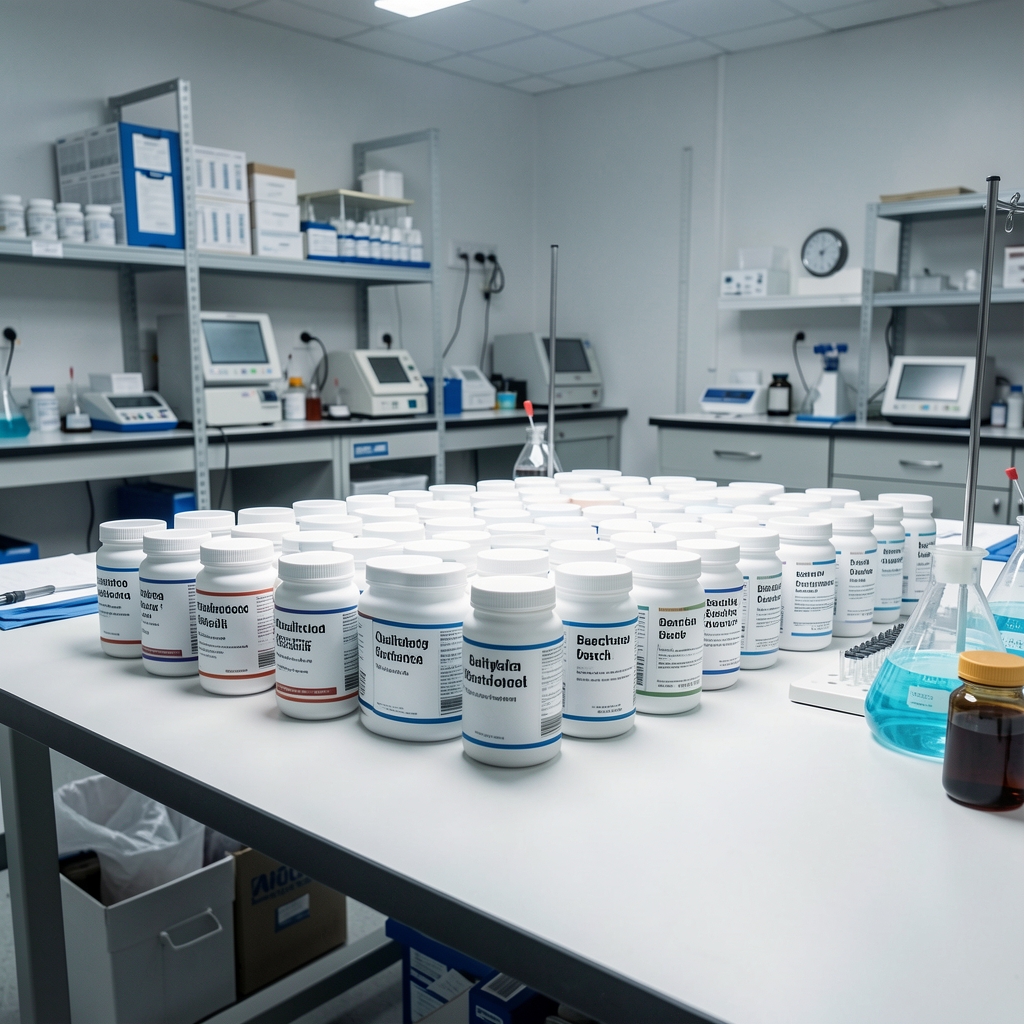
Formulations documented on Talevo undergo independent batch verification through third-party analytical laboratories. Verification covers elemental concentration against label claims, absence of undisclosed compounds, and dissolution profiling for encapsulated formats.
Results are archived by batch code. Verified batches carry a notation in the product record. Batches failing verification are removed from the active reference set until the discrepancy is resolved with the supplier.
Content describing nutrient roles adheres to a vocabulary standard that avoids outcome claims unsupported by the nutritional literature. The editorial style is observational — documenting what ingredients are, where they originate, and what published research describes their function as.
All copy is reviewed against the Talevo vocabulary standard before publication. Passages that overstate effect are revised. The review cycle operates on a rolling basis, with articles re-evaluated when source literature is updated.

Published entries carry a date stamp and revision code. When ingredient documentation is updated — due to new supplier information or revised research literature — the entry is versioned rather than silently overwritten.
The archive maintains the complete revision history for each formulation entry. Readers can access prior versions and review what changed between revisions. This approach reflects the Talevo commitment to transparent documentation over promotional content.

Active ingredients are sourced from documented suppliers, with each batch accompanied by a certificate of composition. Sourcing prioritises suppliers whose facilities maintain food-grade processing standards.
The Talevo reference network spans suppliers across Southeast Asia, South Asia, and select European sources for specific mineral compounds. Geographic distribution is tracked and disclosed within each ingredient entry.
Mineral content is evaluated against declared concentrations. Discrepancies above acceptable variance thresholds result in supplier notification and batch quarantine pending resolution.
Every batch in the active reference set carries a certificate of composition issued by the producing facility. Certificates are retained in the Talevo document archive indexed by batch number and date.
Documentation is reviewed on a rolling quarterly basis. Supplier relationships that do not maintain current certification are suspended from the active reference set until documentation is renewed.
Country of origin is declared for each ingredient. Where sub-regional sourcing is relevant — as with certain botanical extracts — province or island-level origin is noted in the ingredient record.
Encapsulated formats are assessed against dissolution benchmarks under standardised conditions. Results feed into the ingredient's bioavailability notation in the published record.
Random-sample contaminant screening covers heavy metal concentrations and microbial load. Screening results are reviewed by the Talevo quality coordinator before batch approval.
Talevo operates as an independent wellness resource. The editorial team monitors nutritional science literature through indexed databases including PubMed-equivalent repositories and official nutritional authority publications from the relevant geography.
When new research is published that addresses ingredients in the active formulation set, an update review is triggered. The review determines whether the existing entry requires revision, extension, or a notation flagging the new finding.
The standard applied is conservative: Talevo does not describe ingredients as performing functions beyond what the research consensus supports. Where the evidence base is narrow or contested, that status is disclosed in the entry rather than resolved with marketing language.
"Ingredient profiles in Talevo supplements are selected based on published nutritional research and undergo independent batch verification for quality and labelling accuracy."
Talevo does not fund or commission research. All cited literature is independently published and accessible through public indexing.
Ingredient descriptions use vocabulary consistent with the research consensus. Contested findings are flagged, not resolved through confident marketing statements.
Content revisions are versioned and dated. Prior versions remain accessible in the archive. No silent rewrites.
The supply-chain record and the editorial layer are maintained as separate documents. Readers access both, cross-referenced by batch code and ingredient ID.
The most frequently raised questions about how Talevo evaluates, sources, and documents the formulations in its reference set.
The services section documents each formulation in the active reference set, with ingredient sourcing details, nutrient roles, and batch verification status.
View Formulation Set